










Stretching is a simple yet powerful way to improve your overall health and flexibility without needing special equipment or a gym membership. Whether you’re new to fitness or looking to add some gentle movement to your daily routine, stretching at home can help reduce muscle tension, improve posture, and increase your range of motion.
In this beginner’s guide, we’ll cover the basics of stretching, why it matters, and how to create a safe and effective stretching routine at home.
Why Stretching Matters
Stretching helps maintain flexibility, which is essential for everyday movements like bending, reaching, and walking. Improved flexibility can:
– Enhance your performance in physical activities
– Reduce the risk of injury
– Alleviate muscle stiffness and soreness
– Improve posture and balance
– Promote relaxation and stress relief
Even just a few minutes of stretching daily can make a noticeable difference in how your body feels and moves.
Types of Stretching
Before starting, it’s helpful to understand the two main types of stretching:
Static Stretching
Static stretching involves holding a stretch position for 15 to 60 seconds. It gently lengthens muscles and is great for cooling down after exercise or using during a dedicated flexibility routine.
Dynamic Stretching
Dynamic stretching involves moving parts of your body through a full range of motion in a controlled way, often mimicking the movements you’ll perform in a workout. It’s best used as a warm-up to prepare muscles for activity.
For beginners starting at home, static stretching is a safe and effective way to increase flexibility and relax muscles.
Preparing to Stretch at Home
Before you begin stretching, keep these tips in mind:
– Choose a comfortable space: Find a quiet, open area with enough room to move freely.
– Wear comfortable clothing: Loose or stretchy clothes help you move without restriction.
– Warm up slightly: Stretching cold muscles can lead to injury. Try walking in place or doing light activity for 3–5 minutes.
– Be gentle: Stretch to the point of mild tension—not pain.
– Breathe: Maintain slow, deep breaths while holding each stretch to promote relaxation.
Basic Stretching Routine for Beginners
Here’s a simple sequence you can follow at home. Hold each stretch for 20 to 30 seconds, repeat 2–3 times, and breathe steadily throughout.
1. Neck Stretch
– Sit or stand with your back straight.
– Slowly tilt your head to the right, bringing your ear toward your shoulder.
– Use your right hand gently on the side of your head to increase the stretch.
– Repeat on the left side.
2. Shoulder Stretch
– Extend your right arm across your chest.
– Use your left hand to press your right arm closer to your chest.
– Hold and switch arms.
3. Triceps Stretch
– Raise your right arm overhead, bending the elbow to touch your upper back.
– Use your left hand to gently push your right elbow downward.
– Repeat on the other arm.
4. Chest Opener
– Clasp your hands behind your back.
– Straighten your arms and gently lift your hands while opening your chest and pulling shoulders back.
– Hold and release.
5. Seated Hamstring Stretch
– Sit on the floor with your legs extended straight in front.
– Keep your back straight and lean forward from your hips, reaching toward your toes.
– Stop when you feel a stretch in the back of your legs.
– Hold and relax.
6. Quadriceps Stretch
– Stand and hold onto a sturdy surface if needed.
– Bend your right knee, bringing your heel toward your buttocks.
– Grab your ankle with your right hand and gently pull.
– Keep your knees close together and switch sides.
7. Calf Stretch
– Stand facing a wall.
– Place your hands on the wall, step one foot back, and press the heel into the floor.
– Keep the back leg straight and bend the front knee slightly.
– Switch legs.
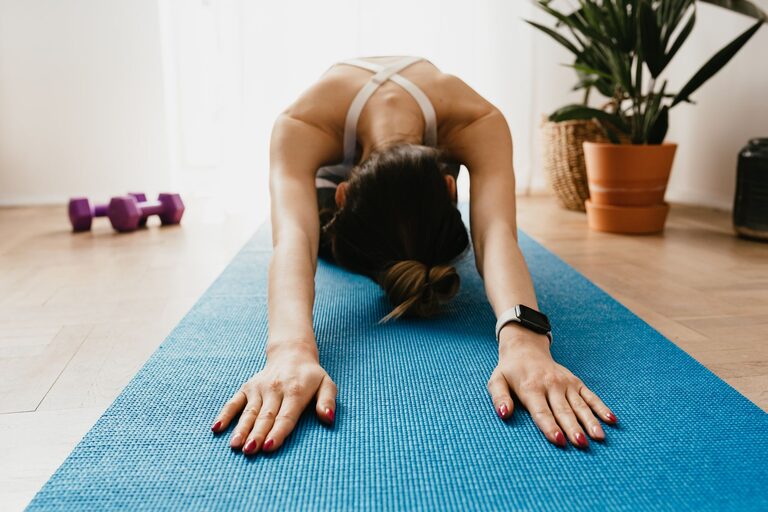
8. Lower Back Stretch (Child’s Pose)
– Kneel on the floor and sit back onto your heels.
– Extend your arms forward and lower your torso toward the floor.
– Relax your neck and shoulders.
Tips for Consistency and Progress
– Stretch daily: Consistency is key to improving flexibility.
– Listen to your body: Never force a stretch or hold it if it causes sharp pain.
– Increase duration gradually: As you become more flexible, gradually hold stretches longer or repeat more times.
– Combine with exercise: Stretch after workouts or on rest days to maintain muscle health.
– Stay hydrated: Drinking water supports muscle function and flexibility.
When to Avoid Stretching
Avoid stretching if you:
– Have a recent injury or inflammation in the area.
– Experience sharp or severe pain during stretching.
– Have specific health concerns; consult a healthcare provider if unsure.
If you feel uncertain about any movement, consider seeking advice from a fitness professional.
Final Thoughts
Stretching at home is an accessible way to care for your body and improve your quality of life. Starting with simple stretches and practicing regularly can help you feel more relaxed, mobile, and ready to take on daily activities with ease.
Set aside a few minutes each day, enjoy the calming process, and watch your flexibility and comfort gradually improve.
Happy stretching!